
Buying amusement equipment from China is not just about comparing product photos and prices. For an amusement park, water park, indoor entertainment center, children’s playground, scenic area, resort, or family entertainment center, the right supplier should understand your project type, site conditions, visitor group, customization needs, quotation scope, delivery requirements, installation guidance, spare parts, and after-sales support.
Many overseas buyers search for a China amusement equipment manufacturer because they want a reliable source for commercial amusement rides and equipment. In real projects, however, the decision is usually bigger than choosing one product. Buyers also need to know whether the supplier can support the full procurement process, from equipment selection and technical document confirmation to delivery, installation guidance, maintenance, and long-term communication.
This guide explains how to choose a suitable amusement equipment manufacturer or project supplier in China, what information to prepare before requesting a quotation, what documents and quotation details to confirm before ordering, and what warning signs to check before paying a deposit.
What Does “China Amusement Equipment Manufacturer” Really Mean for Overseas Buyers?
For overseas buyers, a China amusement equipment manufacturer should mean more than a company that can send product pictures and prices. A reliable supplier should help buyers clarify project requirements, equipment suitability, customization options, technical documents, delivery conditions, installation guidance, spare parts, and after-sales support.
For a single product purchase, buyers may mainly focus on size, price, production time, packaging, and basic installation information. But for larger or multi-category amusement projects, buyers also need to consider site planning, visitor flow, business model, local preparation, quotation scope, shipping, installation responsibility, and long-term maintenance.
A reliable amusement equipment supplier should help buyers answer practical questions: Does this equipment fit my site? Is it suitable for my target visitors? What customization is possible? What documents are available? What is included in the quotation? What costs should be confirmed locally? How will spare parts and after-sales communication work after installation?
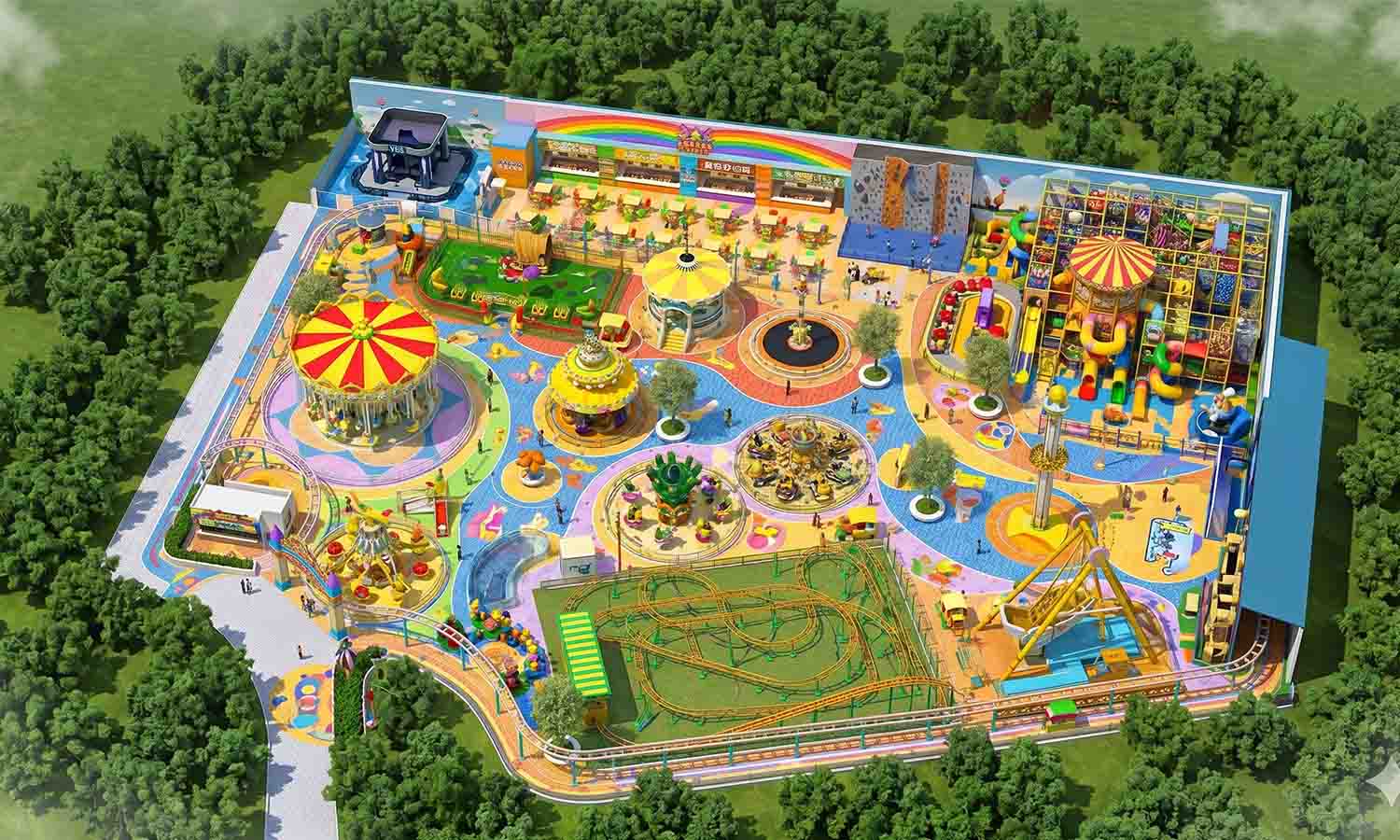
YUTO Amusement is a leading amusement rides and amusement equipment manufacturer, and also a one-stop amusement equipment solution provider for outdoor amusement parks, water parks, indoor entertainment centers, children’s playgrounds, and multi-category amusement projects.
What Type of Amusement Equipment Project Supplier Do You Need?
Different amusement projects require different supplier capabilities. A buyer may know they want to build an outdoor park, water play area, indoor playground, FEC, or resort attraction, but may not know what details should be checked before ordering equipment.
The table below gives a quick view of different project types and the supplier capabilities buyers should evaluate.
| Project Type | Equipment Examples | What Buyers Should Confirm |
| Outdoor amusement rides | Carousel rides, Ferris wheels, bumper cars, pirate ship rides, train rides | Foundation, power, installation, safety features, maintenance, spare parts |
| Water park equipment | Water slides, splash pads, aquatic play structures, spray games | FRP material, water flow, pump room, drainage, anti-slip design, installation |
| Indoor / FEC projects | Soft playgrounds, trampolines, interactive games, small family rides | Site area, ceiling height, materials, fire requirements, visitor flow, payment system |
| Playground attractions | Playground slides, climbing structures, ropes courses, outdoor fitness equipment | Materials, weather resistance, anchoring, safety zone, age suitability |
| Multi-category projects | Outdoor rides + water park equipment, playground + family rides | Equipment mix, delivery sequence, installation support, quotation scope, after-sales |
Outdoor Amusement Ride Project Suppliers
Outdoor amusement ride projects are common for amusement parks, scenic areas, resorts, family parks, tourist attractions, and outdoor entertainment zones. Typical equipment may include carousel rides, Ferris wheels, pirate ship rides, bumper cars, track trains, flying chair rides, and family rides.
For this type of project, buyers should not evaluate equipment only by appearance and price. Outdoor mechanical rides may involve foundation work, electrical connection, unloading conditions, installation preparation, safety systems, operation training, and regular maintenance.
A suitable supplier should be able to explain what the buyer needs to prepare before installation and what information should be confirmed before placing an order.
Explore product options can review YUTO’s amusement rides for more product-specific information.
Indoor Theme Park, FEC, and Children’s Playground Suppliers
Indoor amusement and play projects are common in shopping malls, family entertainment centers, indoor playgrounds, children’s play centers, and indoor theme parks. Typical equipment may include soft playgrounds, trampoline equipment, interactive games, indoor ropes courses, small family rides, and other indoor attractions.
Indoor projects are not simply about placing equipment inside a building. A supplier should understand space use, visitor movement, parent visibility, payment flow, cleaning access, maintenance convenience, and business operation needs.
For example, an FEC using a card system may need a different equipment mix and operation layout from a free-entry children’s play area. A shopping mall indoor playground may also need to consider fire requirements, construction rules, installation time, and daily cleaning routines.
Learn more from YUTO’s indoor theme park equipment .
Playground and Supporting Attraction Suppliers
Playground and supporting attraction projects are common for outdoor playgrounds, schools, community parks, resorts, scenic areas, hotels, and family recreation zones. Typical equipment may include playground slides, climbing structures, ropes courses, outdoor fitness equipment, and adventure play equipment.
Outdoor playground equipment may be exposed to sunlight, rain, humidity, coastal air, and heavy use. Therefore, material choice, anchoring, safety zones, and regular inspection are important for long-term operation.
A reliable supplier should help buyers think beyond product appearance and consider safety, durability, installation, and maintenance from the beginning.
For product categories, you can visit YUTO’s playground equipment.
Multi-Category Amusement Project Solution Providers
Many amusement projects are not limited to one equipment type. A scenic area may need outdoor amusement rides plus playground attractions. A resort may need water park equipment plus family rides. A shopping mall may need an indoor playground plus small amusement rides. A new park may need different equipment categories delivered in stages.
For this type of project, buyers usually need more than a single product supplier. They need a project supplier that can understand the overall project goal, discuss the equipment mix, clarify quotation scope, support delivery planning, provide installation guidance, and continue after-sales communication.
This is where a one-stop amusement equipment solution provider becomes valuable. Instead of treating every product as a separate purchase, buyers can discuss the full project direction, visitor needs, site conditions, equipment combination, installation support, and long-term operation requirements in a more organized way.
YUTO Amusement can support multi-category amusement projects, including outdoor amusement rides, water park equipment, indoor entertainment projects, children’s playgrounds, supporting attractions, and comprehensive projects such as outdoor amusement + water park equipment.
How to Evaluate Whether a Supplier Is Suitable for Cooperation
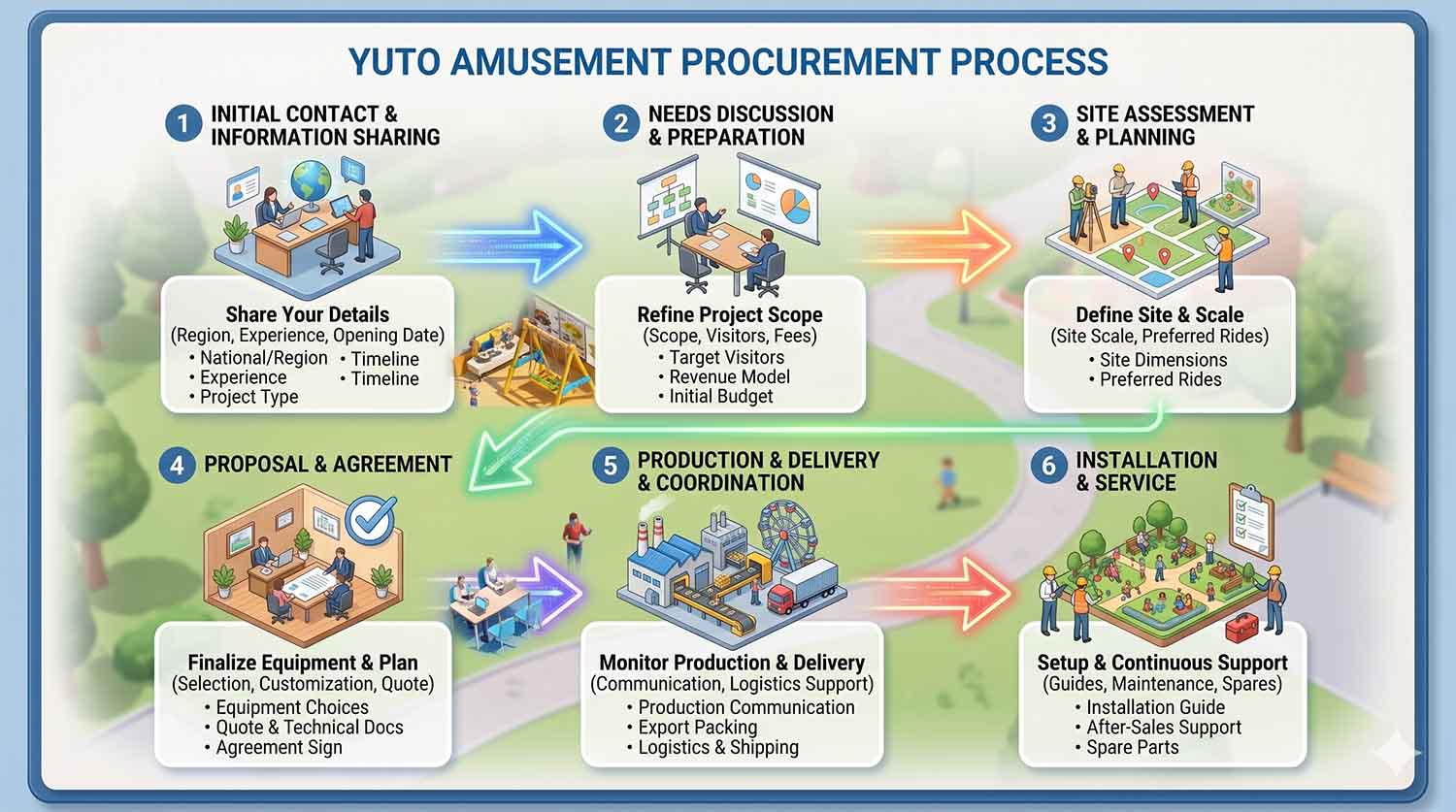
Choosing the right supplier is not only about finding the lowest price. Buyers should evaluate whether the supplier understands the project, asks the right questions, recommends suitable equipment, supports reasonable customization, confirms necessary documents, explains quotation scope, and provides delivery, installation, spare parts, and after-sales support.
Do They Understand Your Project Type?
A reliable supplier should not provide a serious quotation only based on one product photo. Before giving a recommendation, the supplier should understand the project country, project type, site size, indoor or outdoor conditions, target visitors, budget direction, expected opening schedule, customization needs, and installation support requirements.
The buyer’s previous project experience is also important. An experienced amusement park operator may focus more on technical documents, quotation scope, delivery time, and after-sales terms. A first-time investor may need more explanation about equipment selection, site preparation, installation responsibility, and local contractor work.
If a supplier does not ask about the project and only pushes a low price, the buyer should be cautious.
Can They Match Equipment with Your Site, Visitors, and Business Model?
Suitable amusement equipment is not only about appearance. It should match the site, visitor group, operating model, and long-term business goal.
A supplier should consider site area, visitor age group, hourly capacity, queue space, staff requirements, charging model, maintenance difficulty, theme style, and future expansion plans.
Buyers should also explain how the site charges visitors. Is it a separate ticket, all-inclusive ticket, free attraction for traffic, pay-per-play model, membership model, or card system? This information matters because different business models require different equipment combinations. A children’s playground may focus on safety and parent visibility, while an FEC may focus on space efficiency, repeat play, payment flow, and equipment turnover.
Can They Support Multi-Category Project Coordination?
For large or multi-category projects, the supplier should support more than a product list. A comprehensive amusement project may involve outdoor amusement rides, water park equipment, indoor play equipment, playground attractions, interactive games, small family rides, phased delivery, and different installation conditions.
A suitable project supplier should help buyers discuss equipment combinations, delivery sequence, technical documents, packaging, shipping, installation guidance, spare parts, and after-sales communication.
A comprehensive project is not simply several products placed in one quotation. It requires project understanding, equipment matching, delivery planning, and long-term support.
Can They Support Customization Without Ignoring Safety and Practical Operation?
Many buyers want customized amusement equipment, such as special colors, themes, appearance, size, voltage, capacity, branding style, or site adaptation.
Customization can help a project create a more attractive visitor experience. However, customization should not ignore safety, structure, installation feasibility, maintenance requirements, or local compliance. For mechanical rides, structural or capacity changes may affect safety and operation. For water park equipment, slide layout, water flow, height, and material should be confirmed carefully. For indoor playgrounds, theme design should still respect ceiling height, fire requirements, visitor flow, cleaning, and age zoning.
A professional supplier should support reasonable customization while explaining practical limits when needed.
Can They Provide or Confirm Technical Documents?
Technical documents are important for quotation accuracy, local preparation, installation, operation, and maintenance. Before ordering amusement equipment, buyers should confirm whether the supplier can provide or confirm product specifications, equipment dimensions, layout suggestions, foundation requirements, electrical requirements, installation instructions, operation manuals, maintenance information, packing information, warranty terms, and available certificates or inspection documents.
Buyers should not assume that every document is available for every product. Available certificates, inspection information, installation guidance, manuals, and drawings should be confirmed according to the selected equipment, destination country, and project requirements.
Can They Clarify Quotation, Delivery, and Installation Responsibilities?
Many procurement problems happen because the quotation scope and responsibility boundaries are not clear enough.
Before placing an order, buyers should confirm what is included, what is not included, the quotation validity period, whether the price is based on a specific exchange rate, the trade term, whether sea freight is included, who handles customs clearance, how packaging and container loading are arranged, and who is responsible for local transportation, foundation, water, electricity, drainage, or civil work.
For overseas buyers, installation responsibility is especially important. Some equipment may only need basic installation guidance, while large mechanical rides, water park equipment, or comprehensive projects may require more detailed installation planning.
Can They Support Spare Parts, Maintenance, and After-Sales Communication?
Amusement equipment is a long-term operating asset. The purchase does not end when the equipment leaves the factory.
Buyers should confirm whether initial spare parts are included, which parts are wearing parts, how future spare parts can be ordered, whether maintenance information is available, how after-sales communication works, what the warranty covers, and what the warranty does not cover.
For amusement parks, water parks, indoor playgrounds, and FEC projects, downtime can affect revenue and visitor experience. A reliable supplier should help buyers understand spare parts and after-sales communication before the equipment enters operation.
What Information Should Buyers Prepare Before Requesting a Quotation?
To receive a more accurate quotation and equipment recommendation, buyers should prepare basic project information before contacting a supplier. These questions are not meant to make the process complicated. They help prevent wrong equipment selection, incomplete quotations, and later installation problems.
| Information to Prepare | Why It Matters |
|---|---|
| Country / region | Helps confirm shipping, voltage, documents, and local requirements |
| Project type | Helps identify whether the project is outdoor, water park, indoor, playground, or mixed |
| Previous project experience | Helps the supplier adjust communication depth and support level |
| Site size and drawings | Helps check equipment fit, layout, access, and installation conditions |
| Indoor or outdoor conditions | Affects materials, fire requirements, durability, and maintenance |
| Target visitors | Helps match equipment to children, families, tourists, or mall visitors |
| Charging model / card system | Helps plan equipment mix, operation flow, and payment layout |
| Preferred equipment | Shows the buyer’s initial direction |
| Customization needs | Helps confirm theme, color, size, voltage, or capacity |
| Budget direction | Helps recommend realistic options |
| Expected opening schedule | Helps estimate production and delivery priorities |
| Local contractor support | Helps clarify installation and site preparation responsibilities |
Why Previous Project Experience Matters
A buyer with previous amusement project experience may already understand local contractors, safety approval, installation work, and operation preparation. A first-time investor may need more guidance on equipment selection, site requirements, quotation scope, and installation responsibility.
This does not mean a new buyer cannot start a project. It simply means the supplier should adjust the communication style and explain the process more clearly.
Why Charging Model and Card System Matter
The business model affects the equipment list. A free-entry playground used to attract mall traffic may require different equipment from a pay-per-play FEC. A card system or RFID payment system may affect equipment selection, cashier areas, visitor flow, and daily operation.
For indoor entertainment centers, FECs, and children’s parks, buyers should share their planned charging model as early as possible.
What Documents and Quotation Scope Should You Confirm Before Ordering?
A reliable supplier should not only send product pictures and a price. Before ordering, buyers should confirm the required documents, equipment information, quotation scope, delivery terms, installation responsibility, spare parts, and after-sales support.
Documents and quotation details help buyers prepare the site, communicate with local contractors, arrange installation, understand maintenance, and avoid misunderstandings after payment.
Technical Documents to Confirm by Project Type
| Project Type | Documents or Details to Confirm |
|---|---|
| Most amusement equipment projects | Product specifications, dimensions, material information, electrical requirements, installation instructions, operation and maintenance information, packing information, warranty terms, available certificates or inspection documents |
| Outdoor mechanical rides | Foundation requirements, load information, power requirements, safety restraint information, emergency stop system, test or inspection information, maintenance checklist |
| Water park equipment | Slide layout, FRP material, water flow requirements, pump coordination, drainage requirements, anti-slip notes, installation sequence |
| Indoor playground / FEC | Floor plan, ceiling height requirements, material information, fire-retardant information if required and available, age zoning, cleaning guidance |
| Outdoor playground / adventure projects | Ground safety zone, anchoring method, material durability, anti-corrosion information, load-bearing information, inspection checklist |
Not every project requires the same document depth. The required documents depend on the equipment type, destination country, project scale, and local requirements. Buyers should confirm available documents according to the selected equipment before placing an order.
Quotation Scope to Confirm
| Quotation Item | What Buyers Should Confirm |
|---|---|
| Equipment body | Model, quantity, configuration |
| Standard configuration | Standard color, size, control system, and basic setup |
| Customization | Whether theme, color, voltage, size, or capacity changes cost extra |
| Packing | Whether export packing is included |
| Spare parts | Whether initial spare parts are included and listed |
| Technical documents | Which documents are available for the selected equipment |
| Trade term | FOB, CIF, DDP, or other terms |
| Shipping | Whether sea freight is included |
| Installation support | Remote guidance, documents, video, or optional onsite engineer |
| Warranty | Warranty period, coverage, and exclusions |
| Quotation validity | How long the quotation is valid |
| Exchange rate | Whether price is based on a specific exchange rate |
A clear quotation should help the buyer understand what is included, what is optional, what is excluded, and what must be confirmed locally.
Buyers should also confirm the quotation validity period and whether the quoted price is based on a specific exchange rate, trade term, configuration, material cost, or shipping condition. If exchange rates, freight costs, raw material costs, product configuration, or project scope change, the supplier may need to reconfirm the price.
Which Local Costs Should Buyers Confirm Separately?
The equipment quotation may not include all local project costs. Buyers should separately confirm sea freight, customs clearance, import duties, destination port fees, inland transport, local civil work, foundation construction, water and electrical connection, drainage system, crane or forklift rental, local installation workers, supplier engineer travel cost if required, local permits, insurance, and long-term operation costs.
Different project types have different local preparation needs. Outdoor mechanical rides may require foundation and electrical work. Water park equipment may require water pumps, drainage, water treatment, and anti-slip surfaces. Indoor projects may require ceiling height checks, fire approval, floor loading, and electrical connection. Playground projects may require ground safety zones and anchoring.
Buyers should confirm local civil work, permits, construction approval, utility connection, and insurance with local contractors, engineers, or authorities.
Red Flags Before You Pay the Deposit
Before paying a deposit, buyers should be careful if they see the following warning signs:
-
- The supplier only emphasizes low price and does not discuss long-term use or maintenance.
- Spare parts support is not explained.
- Warranty terms are vague.
- Installation responsibility is unclear.
- Certificate or safety document claims are vague.
- The supplier cannot explain basic installation or maintenance requirements.
- The quotation does not explain what is included or excluded.
- The quotation only shows price but not configuration.
- The supplier gives a price without asking about the project or site.
Low price can be attractive, but unclear responsibility can create higher project risk. For commercial amusement projects, buyers should choose a supplier that can communicate clearly before payment.
Why Work with a One-Stop Amusement Equipment Solution Provider?
A one-stop amusement equipment solution provider helps buyers connect project planning, equipment selection, customization, quotation clarification, technical documentation, delivery, installation guidance, spare parts, and after-sales service into one smoother procurement process.
This is especially valuable for first-time amusement project investors, multi-category amusement projects, water park projects, indoor playground and FEC projects, scenic area upgrades, resort family entertainment projects, and buyers who need equipment discussion and delivery support from one supplier contact.
A one-stop solution provider can help buyers reduce communication gaps, organize project information, clarify quotation scope, and better understand what needs to be prepared locally.
For commercial amusement projects, this support can be more valuable than choosing the lowest equipment price. The right supplier helps buyers consider not only what to buy, but how the equipment will be delivered, installed, maintained, and operated over time.
Work with YUTO Amusement for Your China Amusement Equipment Project
YUTO Amusement is a leading amusement rides and amusement equipment manufacturer, and also a one-stop amusement equipment solution provider for outdoor amusement parks, water parks, indoor entertainment centers, children’s playgrounds, playground attractions, and multi-category amusement projects.
YUTO Amusement can support projects involving outdoor amusement rides, water park equipment, indoor theme park equipment, children’s playgrounds, playground equipment, supporting attractions, and comprehensive projects such as outdoor amusement + water park equipment.
Buyers can discuss project needs with YUTO Amusement, including equipment selection, customization requirements, quotation scope, technical documents, production and delivery communication, export packaging, shipping support, installation guidance, spare parts, and after-sales service.
To start a more accurate project discussion, share your country, project type, site size, previous project experience, target visitors, charging model, preferred equipment, budget direction, and expected opening schedule.
Contact YUTO to discuss your amusement equipment project and receive project-based equipment recommendations.